
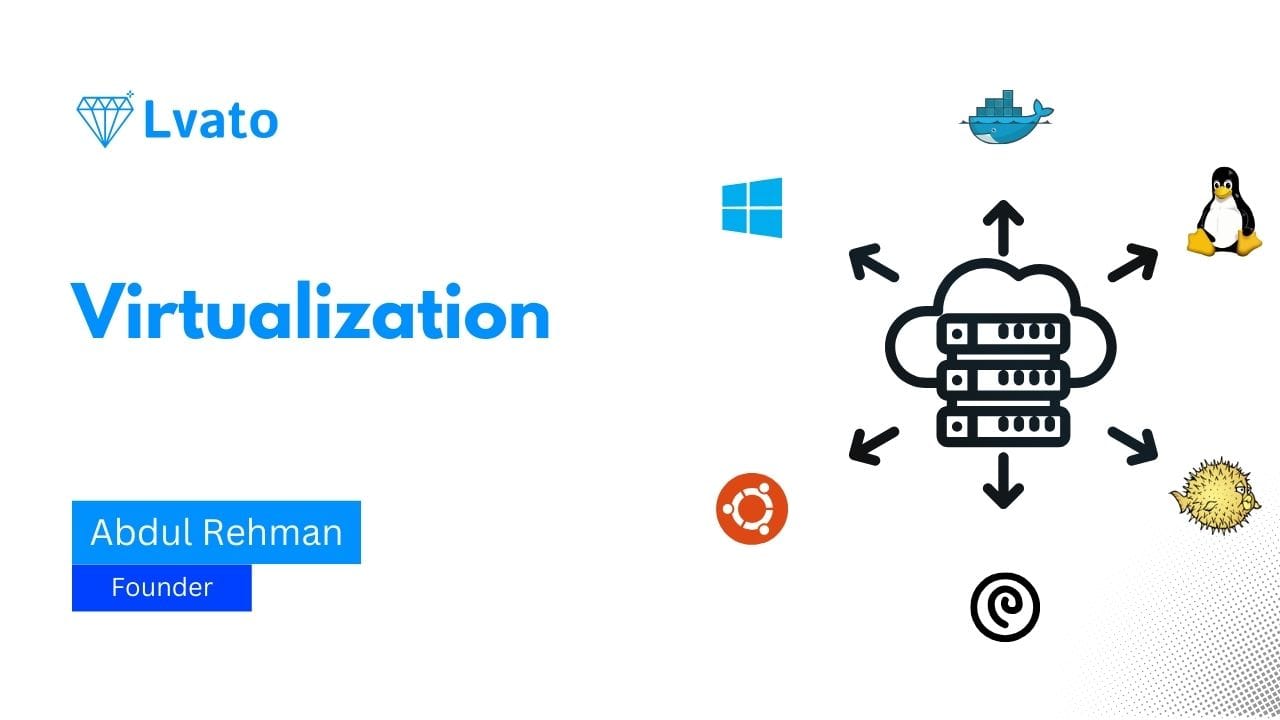
Virtualization is a transformative concept in computing that involves simulating hardware and software, creating a virtual environment to run multiple applications and operating systems on a single physical server. This paradigm shift from the traditional one-machine-per-application approach offers significant advantages in terms of efficiency, cost savings, and resource utilization.
Virtualization
- Consolidation: Virtualization involves consolidating multiple physical servers, each with its own operating system and applications, onto a single physical server in a virtual environment.
- Virtual Machines (VMs): A hypervisor, the core of virtualization, enables a single machine to run multiple VMs, each behaving like an independent computer with its own operating system and applications.
Hypervisor
A Hypervisor is software or application which is used to create VMs or Virtual Machines.
- Type 1 Hypervisor: Installs directly on bare metal hardware, allowing for optimal resource allocation. Common examples include VMware ESXi, Citrix XenServer, and Microsoft Hyper-V.
- Type 2 Hypervisor: Runs on top of an existing operating system, suitable for personal computers. Examples include Oracle VM Virtualbox, Microsoft Virtual PC, and VMware Workstation.
Implementation of Virtualization
- Building a Virtual Server: The process involves selecting server hardware, installing a type 1 hypervisor (e.g., VMware ESXi), and creating virtual machines.
- Allocation of Resources: Virtual machines are configured with specific resource allocations, such as CPUs, RAM, and storage space.
- Installation of Operating Systems: Each VM is loaded with its respective operating system, and applications are installed independently.
Benefits of Virtualization
- Cost Savings: Reduces the need for extensive hardware, saving on upfront costs and electricity consumption.
- Space Efficiency: Requires less physical space as multiple virtual machines share a single server.
- Maintenance and Management: Simplifies administration by centralizing control and minimizing the impact of hardware failures.
- Portability: Virtual machines can be easily transferred between physical servers for scalability and upgrades.
- Resource Utilization: Maximizes computing capabilities by efficiently utilizing machine resources.
- Disaster Recovery: Virtual machines, being software files, can be easily backed up and restored on multiple physical machines in case of failures.
Conclusion
Virtualization has revolutionized the way businesses manage their computing infrastructure. By efficiently utilizing resources, reducing costs, and simplifying maintenance, virtualization has become a cornerstone in modern computing. Embracing this technology ensures a more agile, scalable, and resilient IT environment.
Written By : AbdulRehman