
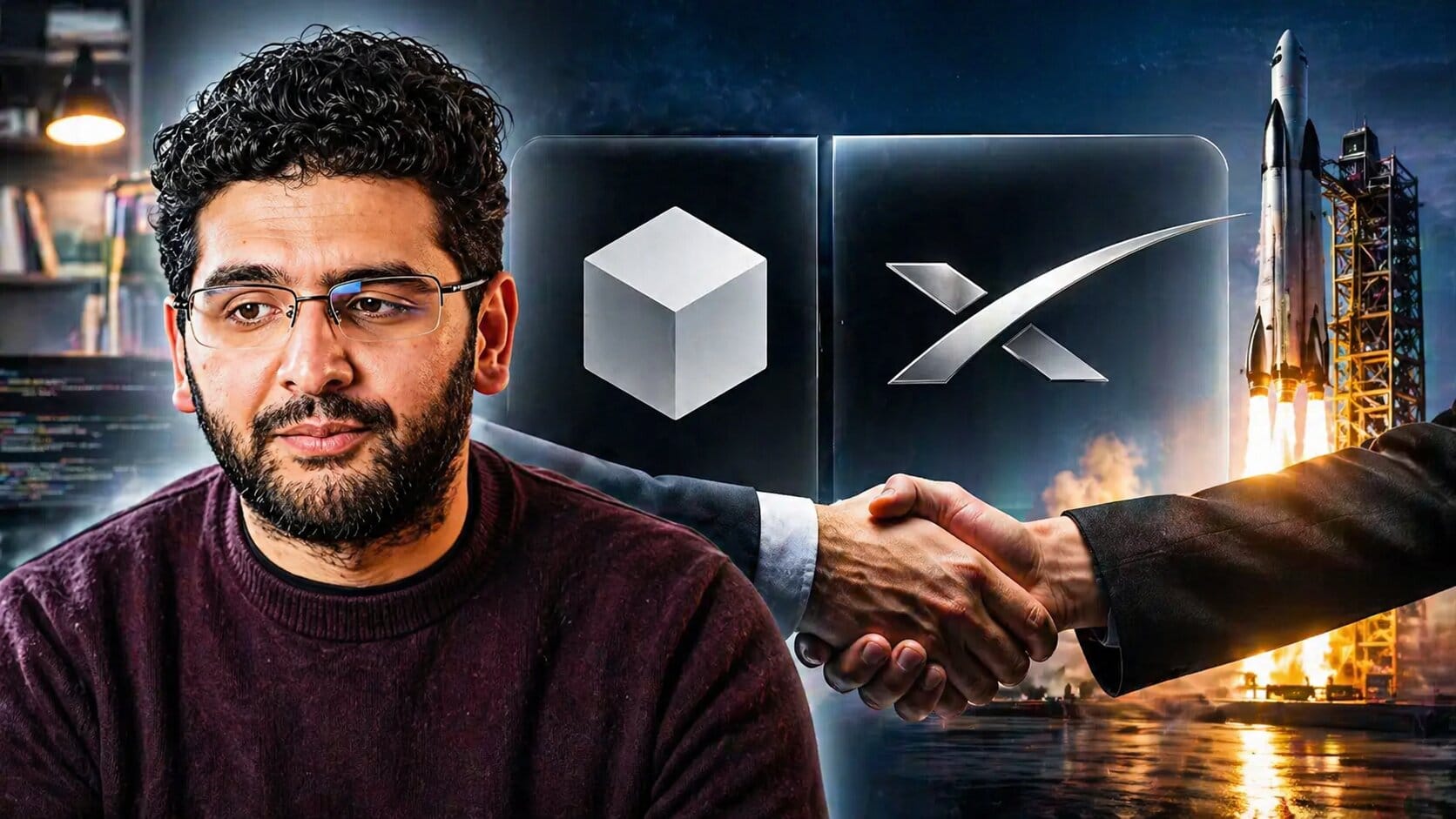
Sualeh Asif was born and raised in Karachi — a city of 20 million people, traffic, noise, ambition, and some of Pakistan's most competitive academic environments. By his own account, there was nothing particularly extraordinary about his early circumstances. He was a sharp student from a middle-class family who happened to love mathematics deeply.
He attended Nixor College in Karachi, one of the city's more academically rigorous institutions. But it was not the school alone that set him apart — it was what he did with the talent he was developing. He entered math competitions. He went further than most. And then he went all the way to the International Math Olympiad, one of the most elite mathematics competitions in the world.
Representing Pakistan at the International Math Olympiad
Between 2016 and 2018, Sualeh Asif represented Pakistan at the International Mathematical Olympiad (IMO) — the world championship of school-level mathematics. He earned honourable mentions at both the 2017 and 2018 Asian Pacific Mathematical Olympiads, competing against students from the most resource-rich education systems in the world and holding his own.
But the part that is easy to miss in most write-ups: between competing, he came back and taught at Pakistani math camps. He was not just taking from the system that shaped him. He was already giving back to it.
MIT — And the Idea That Changed Everything
His academic record earned him a place at the Massachusetts Institute of Technology — one of the most selective universities in the world. At MIT, he joined the Neo Scholars program, an elite mentorship network for the most technically exceptional undergraduates, alongside classmates Michael Truell, Arvid Lunnemark, and Aman Sanger.
All four of them were deeply interested in artificial intelligence before it was mainstream — before ChatGPT, before the AI boom, before investors were throwing billions at every startup with 'AI' in the pitch deck.
During his time at MIT, Asif also built an AI-powered search engine as an early venture — his first attempt at applying AI to a real product. It did not reach the scale of what came next. But it showed the direction he was heading.
In 2022, Asif, Truell, Lunnemark, and Sanger made a decision: they dropped out of MIT and founded Anysphere Inc. Their product: a code editor that put AI at the centre of how software gets written. They called it Cursor.
What Sualeh Asif Actually Does at Cursor
Sualeh Asif serves as Chief Product Officer (CPO) at Cursor. He leads product development — the translation of technical capability into the experience that over one million developers use every day.
In a conversation on the Lex Fridman Podcast, Asif described Cursor's core Tab feature as a tool that predicts and applies entire code edits — not just suggesting the next line, but anticipating what a developer is going to do across multiple files and proposing the full change. He described Cursor not as a replacement for developers, but as a "fast colleague" that takes over the repetitive and predictable parts of the work so the human can focus on the decisions that actually require judgment.
That philosophy — human intelligence directing, AI executing — is what made Cursor different from everything that came before it. And it is what made it the tool that developers chose, quietly and then all at once, until it became unavoidable.
How Cursor Grew From a Dorm Room to a $60 Billion Company in Three Years
The four MIT founders had a clear thesis from the beginning: AI coding tools were being built wrong. GitHub Copilot and similar products were extensions — bolted onto existing editors, able to see only what the editor's API exposed. They could not see your full codebase. They could not understand the structure, history, and relationships between your files. They could only see the file in front of you.
Anysphere built something different. They forked Visual Studio Code and rebuilt it from the ground up with AI embedded into the core runtime — not added on top. Cursor could index your entire codebase. It could understand what you were trying to do across a hundred files. It could make multi-file edits, run agents that complete complex tasks on their own, and learn from the context of your whole project.
Developers noticed. Then developers told other developers. Then enterprises noticed.
| Milestone | What Happened |
| 2022 | Anysphere founded by four MIT students including Sualeh Asif |
| March 2023 | Cursor officially launched — $11M seed funded by OpenAI Startup Fund, Nat Friedman (former GitHub CEO), and others |
| Mid-2023 | $60M Series A at $400M valuation — Andreessen Horowitz and Thrive Capital |
| Jan 2025 | Cursor reaches $100M annualised revenue — faster than Slack, Dropbox, Zoom |
| Jun 2025 | $900M raised at $9.9B valuation |
| Nov 2025 | $2.3B Series D at $29.3B valuation — Accel, Coatue, Andreessen, Nvidia, Google, DST Global |
| Feb 2026 | Cursor crosses $2 billion in annualised recurring revenue — fastest B2B SaaS to $2B ARR in history |
| Apr 21 2026 | SpaceX announces $60B acquisition option — Cursor halts planned $2B VC round |
For context on how remarkable that growth is: Slack took two and a half years to reach $100 million in revenue. Cursor did it in around 18 months from first product launch. By February 2026 it crossed $2 billion in ARR — a milestone that took Snowflake, Zoom, and every other fast-growing SaaS company far longer to reach.
Today, more than 67% of Fortune 500 companies use Cursor. Over one million developers use it every day. Companies like Nvidia, Adobe, Uber, Shopify, Stripe, Midjourney, PayPal, and Salesforce are all on the platform. Anysphere is projecting more than $6 billion in annualised revenue by end of 2026.
The SpaceX Deal: What Happened and Why
On April 21, 2026, SpaceX posted on X: "SpaceXAI and @cursor_ai are now working closely together to create the world's best coding and knowledge work AI."
The deal gives SpaceX two options. It can acquire Cursor outright for $60 billion before the end of 2026. Or, if it chooses not to complete the acquisition, it pays Cursor $10 billion for the collaboration work the two companies are doing together.
As part of the immediate partnership, Cursor gets access to SpaceX's Colossus supercomputer — described as equivalent to one million Nvidia H100 GPUs — to train its next-generation AI coding model, Composer 2.5.
Why SpaceX Wanted Cursor
SpaceX merged with Elon Musk's AI startup xAI in February 2026 in a deal valued at $1.25 trillion. The combined company is preparing for an IPO expected in June 2026, targeting a valuation of around $1.75 trillion — potentially the largest public offering in history.
To get that valuation, SpaceX needs Wall Street to see it as an AI company, not just a rocket and satellite company. AI companies receive far higher valuation multiples than aerospace companies. Cursor — loved by developers, used by over half the Fortune 500, generating billions in ARR — gives SpaceX instant credibility in the AI space.
It also gives SpaceX something it does not currently have: a real, working, market-leading AI product that millions of people use every single day.
Why Cursor Took the Deal
According to TechCrunch, Cursor was days away from closing a $2 billion funding round at a $50 billion valuation when SpaceX's offer came in. Cursor halted the round and took the SpaceX deal instead — because the $10 billion collaboration payment alone exceeds what VC investors were offering, and the $60 billion acquisition option is in a different category entirely.
CNBC also confirmed that Microsoft had considered buying Cursor before the SpaceX announcement but chose not to proceed. SpaceX moved faster and offered more.
| 💡 Key fact: Sualeh Asif holds approximately 4.5% of Anysphere. At a $60 billion valuation that stake is worth around $2.7 billion. Forbes currently estimates his net worth at $1.3 billion based on the earlier valuation — a figure that will update when the acquisition is formally completed. |
How Pakistan Reacted — and Why It Matters
When the news broke, Pakistani social media lit up in a way that rarely happens around a technology story. Dawn, The News International, Geo, Business Recorder, Express Tribune, Pakistan Today, and Daily Times all covered it within hours. The story ran in every major Pakistani outlet.
The reaction was not just pride. It was something sharper — a recognition that the ingredients for this kind of success existed inside Pakistan all along. Sualeh did not get his mathematical foundation at MIT. He got it in Karachi classrooms, at Nixor College, competing in Pakistani math olympiads, and teaching at Pakistani math camps. What MIT gave him was access: to compute, to capital, to a network of people who could make the company happen.
| 🇵🇰 What Pakistan's leaders said: Bilal bin Saqib (Chairman, Pakistan Virtual Assets Regulatory Authority): "This is a profoundly proud moment for Pakistan, and undeniable proof for our youth that there is no ceiling to what they can achieve. We don't lack brilliant minds — what we lack is the ecosystem to support them locally." Umar Saif (Former Federal IT Minister): "Finally the kind of role model Pakistani youth needs. Not property dealers, tax evaders, bank defaulters. But a self-made kid from a middle-class family in Karachi. Studied at MIT, started a hugely impactful company, changed the way people write code, now worth over $1 billion at the age of 26!" Laeeq Ahmad (Founder, Sarmayacar VC): "Millions of Pakistanis left for a better future and the government is happy because they are sending remittances from abroad. Imagine a single person making this impact but from Pakistan. For that, the government needs to make policy level changes and incentivise those who dare to dream." |
This is the part of the Sualeh Asif story that goes beyond inspiration. His journey is not just the story of one exceptional person. It is a data point that exposes both what Pakistan is capable of producing and where it keeps failing to create the conditions for that talent to stay.
Pakistan's Tech Future: What Needs to Change
Pakistan has 68% of its population under the age of 30. It has over 500,000 software developers. IT exports crossed $3 billion annually and grew 23.7% in 2024–25. The government committed $1 billion in AI investment by 2030 through the Islamabad AI Declaration signed in February 2026. A National AI Policy with a six-pillar framework was published in 2025.
The building blocks are real. The talent is real. So why does Pakistan keep producing Sualehs for other countries to benefit from?
The Brain Drain Problem
Pakistan loses an estimated $4.2 billion annually in opportunity cost from brain drain — the net loss after accounting for remittances sent home. A 2023 Gallup Pakistan survey found that 62% of young professionals would prefer to work abroad if given the opportunity.
The push factors are well known: low salaries, limited career growth, political instability, inadequate research infrastructure, and a startup ecosystem that is growing but still thin compared to what a Karachi-born MIT student finds in Silicon Valley.
Sualeh Asif's story makes the point more precisely than any policy paper can: the talent that built a $60 billion company was shaped by Pakistani education, Pakistani competition, Pakistani resilience. The environment that let it become $60 billion was not Pakistan.
What Is Already Changing
- The government committed $1 billion in AI development by 2030 through the Islamabad AI Declaration
- A National AI Policy 2025 established Centers of Excellence in AI in major cities
- Pakistan's IT exports grew 23.7% in 2024–25, approaching $4 billion annually
- The government launched an Rs 28.8 billion Emerging Technology and AI Fund to support startups
- Special Technology Zones are being developed to create enabling environments for tech companies
- A target of training one million people in AI skills was set in the National AI Policy
What Still Needs to Happen
The honest assessment from Pakistan's own tech leaders is consistent: the announcements are there, but execution has historically been the failure point.
- Access to compute: Pakistani developers and researchers cannot build competitive AI models without access to high-performance computing — the same Colossus supercomputer that SpaceX is giving Cursor access to for free. Pakistan needs data centre infrastructure and GPU access at a national level.
- Venture capital at scale: Pakistan's startup ecosystem is valued at around $4 billion. That is promising but not yet deep enough to fund the kind of company Cursor became. A single Cursor-scale exit would transform the local VC landscape overnight.
- Policy that rewards risk: Building a startup means taking enormous personal risk. Pakistan's regulatory and tax environment does not yet reward that risk the way Silicon Valley's does. Changing this requires deliberate policy — not just announcements.
- Keeping talent connected: Not every Pakistani founder needs to stay in Pakistan. But maintaining connection to the ecosystem — mentoring, investing back, building remote teams in Pakistan — is something the government and private sector can both do more to encourage.
| 🔭 The biggest question: What would happen if even a fraction of the compute, capital, and ecosystem access that Sualeh found at MIT existed inside Pakistan? How many more $60 billion companies are sitting in Karachi, Lahore, and Islamabad right now, waiting for an environment that gives them a chance to grow? |
Sualeh Asif's story does not end with one Pakistani co-founder at a Silicon Valley startup. It starts a conversation about what Pakistan could become if the country stopped celebrating its exported talent and started creating conditions that make that talent want to stay.
What Is the Future of Cursor After the SpaceX Deal?
The full acquisition will not happen until after SpaceX's IPO, expected in summer 2026. The deal is structured this way deliberately — SpaceX wants to use publicly traded stock to finance the $60 billion purchase rather than cash, and updating its private financial filings before the IPO would complicate the listing process.
What Changes for Cursor Users
- Cursor gains access to Colossus — SpaceX's supercomputer with one million H100-equivalent GPUs — to train better and faster models
- Composer 2.5, the next version of Cursor's core model, is being trained on that infrastructure right now
- The entire Cursor team stays intact — SpaceX does not have a significant AI workforce and needs the people, not just the product
- Cursor stops relying on Anthropic's Claude and OpenAI's GPT as its underlying models and builds its own proprietary AI
- Deeper integration with xAI's Grok models as the partnership matures
What Changes for the AI Coding Market
- Microsoft, which looked at buying Cursor but passed, now faces a significantly strengthened competitor backed by the world's largest supercomputer
- OpenAI, an early investor in Cursor, now competes directly against a company it helped fund
- Anthropic's Claude Code and OpenAI's Codex will face much stronger competition as Cursor's models improve with Colossus-scale compute
- The AI coding tools market — already worth $12.8 billion in industry revenue in 2026 — will continue to grow, with SpaceX-backed Cursor as its dominant player
What the Future Could Look Like
If the acquisition happens, Cursor becomes part of a company that owns rockets, satellites, internet infrastructure through Starlink, and the world's largest AI supercomputer. The vision Elon Musk has articulated — where AI coding assistants eventually help build physical systems, aerospace projects, and orbital infrastructure — is not a stretch from where Cursor already sits.
For developers, the near-term future is clear: the tools get more capable, faster. For Pakistan, the long-term message is equally clear: the talent to build those tools already exists here. The question is whether the environment will be built to keep it.
Build Your Projects With Lvato — The Hosting Partner for Pakistani Developers
Whether you are building your next project with Cursor, deploying AI tools on a VPS, or launching your business website — the moment your work is ready to go live, you need a reliable hosting partner.
At Lvato, we work with developers, freelancers, startups, and businesses across Pakistan. We offer the infrastructure to take your projects from local to live — at prices that make sense for the Pakistani market.
| Lvato Service | What You Get |
| Web Hosting | Affordable shared hosting for websites, blogs, and small business projects. One-click WordPress install. Perfect for your first website or your client's site. |
| VPS Hosting | Full root access. SSD storage. Deploy n8n, Ollama, Cursor-built apps, Coolify, WordPress, or any application. Scale as your project grows. |
| Domain Registration | Register your .com, .pk, or any domain. Connect it to your Lvato hosting in minutes. |
Cursor helps you write the code faster than ever before. Lvato puts it online, reliably, at a price that works.
| 🌐 Lvato Web Hosting: Start your website today. https://lvato.com/web-hosting/ |
| ⚡ Lvato VPS Hosting: Full control. Deploy anything. https://lvato.com/vps-hosting/ |
| 🔗 Lvato Domains: Register your domain and get online. https://lvato.com/domain-name-search/ |
A 26-year-old from Karachi just co-founded a $60 billion company. The tools he helped build are available to every developer in Pakistan today. The only thing left is to build something with them — and put it online.
Sources researched for this article:
Dawn · The News International · Business Recorder · Geo.tv · Express Tribune · Pakistan Today · Daily Times · MM News · The Nation · TechJuice · ProPakistani · The Asian Mirror · Pediastan · Startup.pk · CW Pakistan CNBC · TechCrunch · Fortune · Yahoo Finance · SiliconAngle · Contrary Research · Forbes · Taskade Blog